Friday, September 16, 2011

Money Talks

A few weeks back, gentle readers, your MatchGirl published a post highlighting the importance of getting paid what you are worth. This is something, unfortunately, that plagues so many as we continue in this economy.

There are people who are employed, full-time, but still struggling to make ends meet.

There are people who are under-employed, constantly struggling.

There are those who are unemployed, who are happy to take any job that comes their way.

And then there are those who make plenty to live on - perhaps not luxuriously so, but enough - who complain that they still need more.

It's rough in a city like New York, where the cost of living is so very high, but these people exist in every corner of the globe.

Though your MatchGirl knows it's impolite to speak of money, sometimes, one needs to talk about it. Sometimes one needs to get out there and make their voice heard. Because how else are you going to get paid more money? How else are you going to talk to your boss or find a new job or let your network know that you need something more?

Your MatchGirl, dear readers, knows that it's hard to talk about. She has the same problems as you do.

So here is the question for you - how do you approach these issues? These conversations?

You're valuable. How do you make sure to get paid what you know you're worth?

Wednesday, September 14, 2011

Job Of The Future? Will They Be Inspired By The Past?

Your MatchGirl, gentle readers, has been thinking about the jobs of the future, about how to get them and about what they might be.

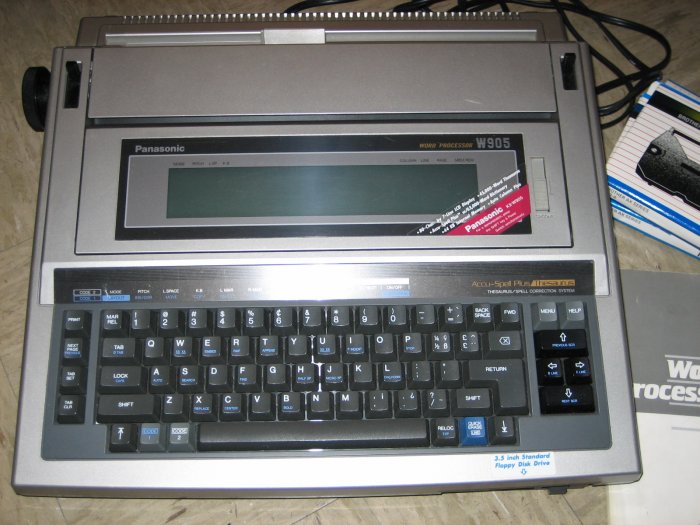
I have been thinking that the job I currently hold, Head of Social Media, didn't even exist when I was at university. People barely used the internet. I had a roommate who wrote her term papers on an electric typewriter (for the young'uns - this is what that looks like). To say that I could have been working towards a career as a social media professional would have required some amazing foresight and, perhaps, a time machine.

And when I think of the jobs that are to come, I know that there will be jobs like mine - as technology changes - that one can only prepare for by living life and learning and adopting and adapting.

But your MatchGirl thinks, dear readers, that some of the jobs of the future are jobs that we already know how to do. Or we did at one time.

I watch the people around me, my friends, and the paths they are on. I am lucky to live in Greenpoint, Brooklyn, and have as friends and neighbors some true artisans who are interested in looking to the past to provide for the future.

I have a friend who keeps bees and chickens and teaches classes on urban farming.
I know a woman who runs a rooftop farm.
I live down the street from the lovely couple who make bacon marmalade.
I am pleased to know a woman who wrote a book on homemaking in the modern age.
I have friends who have an ice cream empire.
I know the people behind The High School for Public Service Youth Farm.

I know canners and sausage makers, chocolate crafters and pizza makers.

I know people who have taught themselves to do things that their parents might not have even known how to do. But things that sustained their grandparents.

Is it possible that to prepare ourselves for the future, we need to look to the past?

Your MatchGirl thinks this might be the case.

Monday, September 12, 2011

Making The Most of Long Term Unemployment

Recently, gentle readers, your MatchGirl posted about the cycle of long term unemployment. She also posted about how more and more employers are saying that unemployed need not apply to their job listings.

This is a trend that troubles your MatchGirl. Unemployeds are the ones who need the jobs being posted. Of course, there are plenty out there who are under-employed, and could use a leg up, a better income or a job more fitting with their education and training. But, at the end of the day, right this second, the people who really need that job you've just posted are the unemployed.

Here's an idea for the long term unemployed, looking to make themselves more appealing to hiring managers. Volunteer.

LinkedIn, the social network for professional people, has recently updated their formatting to let you add volunteer experience to your online resume. And this is great.

Part of the reason that businesses are not keen to hire the long term unemployed is because they feel that they must be lazy people. They feel they are the kinds of people who take the east way out or mooch off the system or are not going to be able to play well with others. A significant gap - and unexplained one - on your resume, is never going to look good. So add the work you've been doing that you're not getting paid for.

This is something that your MatchGirl did, when she had been unemployed for a while. She added a related experiences section - to the top of her resume - to highlight the activities she was participating in during her unemployment. I'm certain it helped my resume get a little higher in those piles on the HR guy's desk.

You not only need a job, you want one. You're not lazy. You know it. Now - prove it to them. Get yourself out there and do some good work. And don't forget to tell the world.

Friday, September 9, 2011

Jobs For The Future? Rethink Education

Gentle readers, your MatchGirl read an interesting piece over on Seth Godin's blog on the weekend, and she thought she should share it with you, here.

The piece is entitled Back to (the wrong) School and it shares some perspective on the evolution of the modern public school educational system - where it started and where we're at. As kids all over the country embark on another year of school, your MatchGirl thinks this is something that we need to look at.

I don't have kids. Some day I might. I might not. But I think about the educational system in America - my mother is a teacher as are several friends - I hear a lor from them, on their views on what works and what doesn't and how kids are treated (and how parents, teachers and administrators are treated). It's been a long time since I've been in a public school classroom, but I'm not without perspective. I wonder what can be done to fix a system that is so very broken.

And I wonder how many people actually care.

I remember going to school board meetings when I was a kid and having old men stand up to speak against new initiatives, saying "It was good enough for me, it should be good enough for these kids." These guys are still around. And their voices are loud.

We live in a country that places such little value on education. We live in a society that makes fun of and diminishes smart people. We live in a country where people decide who they'd like to be President by whether he's a good bowler or if they'd like to have a beer with him. We live in a society where if you are different, you are bullied.

And it's getting worse.

As this election season gets under way, your MatchGirl worries for the future of America. She worries what will become of the schools. She worries what will become of the next generation, and the one after that. Not only is the country not creating jobs for the future, we're not even making sure the next workers we're raising can do the ones of the present.


Wednesday, September 7, 2011

What Retail Taught Me

Monday, Labor Day, there was an interesting edition of the Brian Lehrer show on WNYC - replaying some interesting segments looking at working in America (to be fair pretty much all the programming was on this topic). The one that caught the ear of your MatchGirl was about the Politics of Retail. This is something, gentle readers, that rests close to my heart.

You may not know, but your MatchGirl spent over a decade working in the retail industry and she is familiar with the trials and tribulations of it. From working for a big chain, where every moment is clocked and accounted for, mystery shoppers coming in, a lot of protocol to follow to working at a mom'n'pop where there wasn't even a safe, and the cash just hung around in the back (above the stereo) - I've run the gamut in retail.

This is what I know. Retail taught me loads. I stayed in it too long - partially because I was lazy and partially because it's hard to transition out once your resume is loaded with retail jobs - but it taught me everything I know.

In a retail environment, you need to be able to size the customer up in about 10 seconds. You need to know who they are, what they're looking for and if they can afford it. You can't judge too closely by the clothes they wear or the handbag they are carrying. One of the most wealthy, and most consistent,  customers I ever had was a gentleman who looked like he stepped out of central casting for a homeless person. He was rich and eccentric and had a standing lunch reservation at the Ritz. You can't always tell.

In a retail environment, you need to listen. Going back to my number one networking tip, listen. If you need to make that sale to meet your goal, you need to know what the customer is looking for. But it's more than just hearing what they said they came in for, it's about listening to what they are saying. In my experience, what a customer knows how to ask for and what they are really looking for are often different things. A pro knows how to suss the difference.

In a retail environment, you need to communicate. You need to be able to talk to, and get along with, a wide variety of people. You need to be able to let them know what's going on and to hear what they're saying. Even if your each racing towards your own commission goal, a little communication will help you all out along the way.

In a retail environment, you need to be able to turn on a dime. The customer comes first and it doesn't matter if you're manager is expecting you to finish inventory of a wall of product by noon. If a customer comes in, you need to drop what you're doing and help them. You need to, in simple and catch-phrase terminology, prioritize.

I could go on for a lot longer. I could start talking about how people, especially denizens of New York, don't treat retail workers right. I could write a companion book to Ms. Kelly's piece. I won't do it here.

Retail is a hard job. A really hard job.

I don't want to go back. But I'm glad I did it.


Friday, September 2, 2011

Turn Turn Turn: The Cycle of Long Term Unemployment

In a recent item on The Huffington Post, Alan Krueger's study results announced that the long term unemployed looked for jobs less and slept more.

Gentle readers. Your MatchGirl is no scientist. But she was among the long-term unemployed.
Krueger and Mueller offered three likely explanations for the decline in job-search durations. First, workers could have run through most of the decent jobs to apply for. Second, they could have gotten better at searching and needed less time to scan and respond to ads. And third, they could have gotten discouraged and quit looking.
And as someone who was unemployed for 18 months, your MatchGirl knows a thing about the cycle of unemployment. Someone who is among the "long term unemployed" is someone who has been without a job for six months or more. And, as many of you know, gentle readers, from your own unemployment (as that's how so many of you came across this little blog), in this economy that time is often longer.

I remember the days of unemployment existing in cycles. Some weeks would be all about the hustle, writing emails, sending resumes, working on cover letters and scouring the job boards. But other weeks would be slow and depressing. Because there would be no worthwhile, or, you know, paying, jobs to apply for and there would no one to send anything to. In those times, your MatchGirl worked on her own creative projects and her own blogs and took classes, but not everyone does that. Not everyone wants to. Not everyone can.

Job searching is a job in itself. And rarely a rewarding one. Some mornings there are loads of jobs to apply to and a ton of business cards in your pocket to reach out to. Other mornings... not so much - just the same six jobs that had been taunting you for the past three days. What are you supposed to do? Then you take a day or two (or more) off from truly looking because, though you've followed up with everyone you can, you can't even get a response to an email, let alone an offer of an interview. And who wants to be so bummed out? So you surf the web and play Words With Friends and you watch some daytime television and fall asleep early. Then you wake up one morning excited to look again and you send out some emails and ... And so the cycle goes.

Someone who has never been one of the club cannot truly and fully appreciate the nuances and difficulties of this cycle. But we can, gentle ones. We've been there. We know how the story ends.

So, forget this study. Sleep if you're tired (though not if you're depressed, that's just no good). Look for jobs. Apply for things that are worth your while. And make your own magic happen.

Good luck, dear readers. I believe in you!

Wednesday, August 31, 2011

One More Networking Tip: Listen

As you know, gentle readers, tonight is the Work It Brooklyn event at Brooklyn Winery. I hope you've registered and we'll see you there.

Last week your MatchGirl wrote a post for long-time friend of Unemployed Brooklyn, Brokelyn, in which she advised you all on How To Work It Best at Work It Brooklyn and, of course, any networking even you might find yourself attending.

I wanted to add one more, though, dear readers. Briefly.

Listen.

This is something that is hard to do. Of course, you are at a networking event to promote yourself, to meet people who can help you, to find a new job or a freelance gig. You're there with your own agenda. Everyone is.

But this is something that I have learned, in years of going to these events and in over a year and a half of facilitating Work It Brooklyn, listening to those around you takes you very far. Listening to the person you are speaking with, truly listening, will open up a million avenues for you. You'll learn what they do and where they work and what they are there to find. During this time, don't think about what you're going to say or what you might say, just listen. And when they're done speaking, they'll listen to you. You'll find out who they're connected to, and, you just never know, they might be able to facilitate an introduction to someone you've been hoping to meet.

This is tip number eight.

What is your best networking advice?